Recycled HDPE comes in two working grades — blow grade and injection grade — and the difference comes down to a single flow number. Pick the wrong one and the material simply will not run on your machine. Here is what that number means and how to match it to your part.
Melt flow rate — also written MFR or MFI (melt flow index) — measures how easily molten plastic flows under a set load and temperature, reported in grams per 10 minutes (ASTM D1238). It is the quickest, most practical way to sort HDPE grades on a purchase order.
The key relationship: MFR is inversely linked to molecular weight. A low MFR means the polymer chains are long and heavy, so the melt is stiff and slow-flowing. A high MFR means shorter chains and a thin, fast-flowing melt. That single trade-off is what makes one grade right for blow moulding and another right for injection moulding.
Blow grade recycled HDPE runs at a low melt flow rate — LSM's blow grade tests at an MFR of about 1 g/10min with a density around 0.952 g/cm³. That high molecular weight gives the melt the strength to hold its shape as it is inflated against the mould, which is exactly what blow moulding demands.
Blow moulding forms hollow parts by inflating a tube of molten plastic. Low-MFR HDPE is the workhorse for:
The reason is melt strength: a thin, high-flow material would sag or blow through before the part forms. High molecular weight also brings better environmental stress-crack resistance, which matters for containers that hold liquids over time.
Injection grade recycled HDPE runs at a much higher melt flow rate — typically MFR 10 or above. The thinner melt fills a mould cavity quickly and completely, packing out ribs, thin walls and fine detail before it freezes off. That is what injection moulding needs to cycle fast and fill cleanly.
Injection grade recycled HDPE is available in black, blue, green and dark grey. If you tried to injection-mould a blow grade, the stiff melt would struggle to fill and you would fight short shots and high pressures.
Start with your process, then your part:
Colour, volume and any recycled-content targets round out the spec, but MFR is the decision that has to be right first.
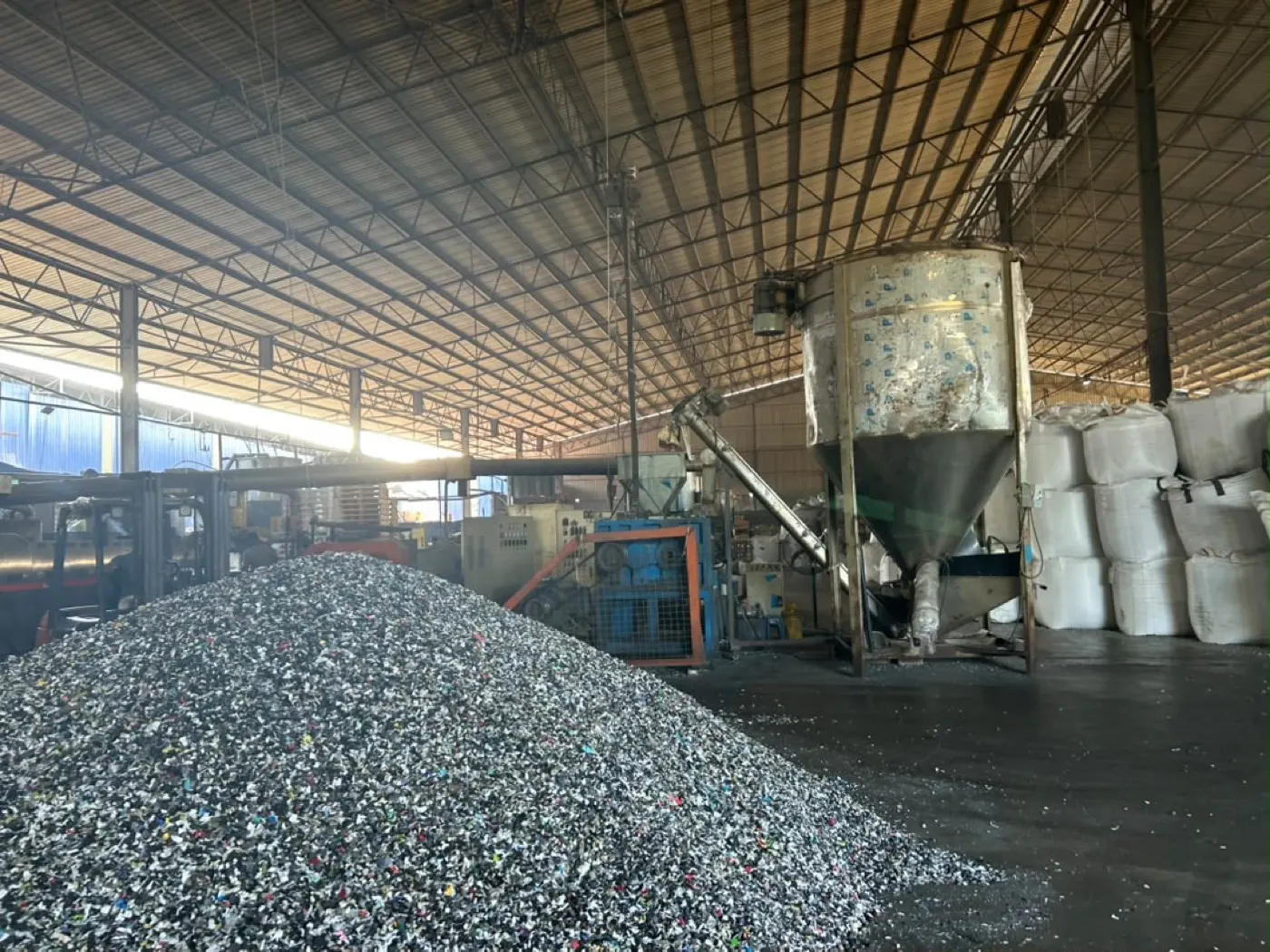
We manufacture recycled HDPE pellets in-house at our Telok Gong, Klang plant — imported flakes are crushed, washed and pelletized on our own line, then tested on site for melt flow rate, impact strength and density. Every product ships with a Certificate of Analysis, and full test reports are available on request, so the grade you order is the grade you receive — batch after batch.
Tell us your process, part and volume — we'll match the MFR, send a COA and a quote.