Industrial salt is one of those raw materials that quietly sits behind dozens of processes — from the water that comes out of your tap to the fabric in your clothes. Here is what industrial salt is, how its grades differ, and where each one is used across Malaysian industry.
Industrial salt is sodium chloride (NaCl) produced for industrial rather than food use. LSM's industrial salt is supplied to the IS-7224 standard at a purity of 98.5–98.9% NaCl, with a particle size of 0.5–1.2 mm and a white, crystalline appearance free from visible impurities. It is an industrial-grade product — not food grade — and every batch ships with a Certificate of Analysis.
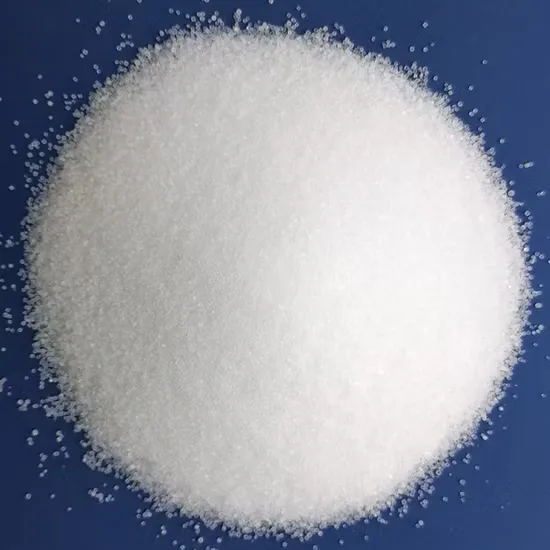
The same product is supplied in two closely related grades, separated mainly by purity:
The refined grade sits at the top of the range at 98.9% NaCl, with lower moisture and tighter impurity levels. It is the choice where a cleaner, higher-consistency salt matters. This refined salt is the grade behind LSM's export track record.
The standard grade at 98.5% NaCl covers the broad range of industrial jobs where 98.5% purity is entirely sufficient — the bulk of water treatment and general processing demand. Both grades share the same 0.5–1.2 mm particle size and white crystalline form.
Quality claims are easy to make; export orders are harder to earn. LSM's industrial refined salt is supplied to demanding export markets — where consistency and documentation are everything. That track record is a useful shorthand for buyers weighing suppliers: the same product and quality control that satisfies an export customer stands behind every local order.
For most water treatment and general industrial jobs, standard 98.5% salt is the practical, cost-effective choice. Where you need the extra consistency — or you are supplying a customer who does — the refined 98.9% grade is the answer. Tell us the application and volume and we will point you to the right grade with its COA.
Tell us the grade, application and volume — we'll send the spec, COA and a quote.